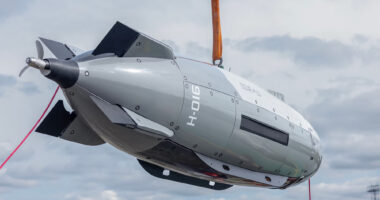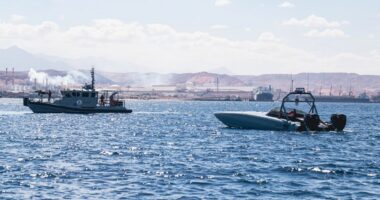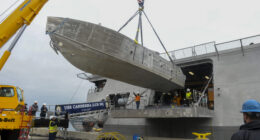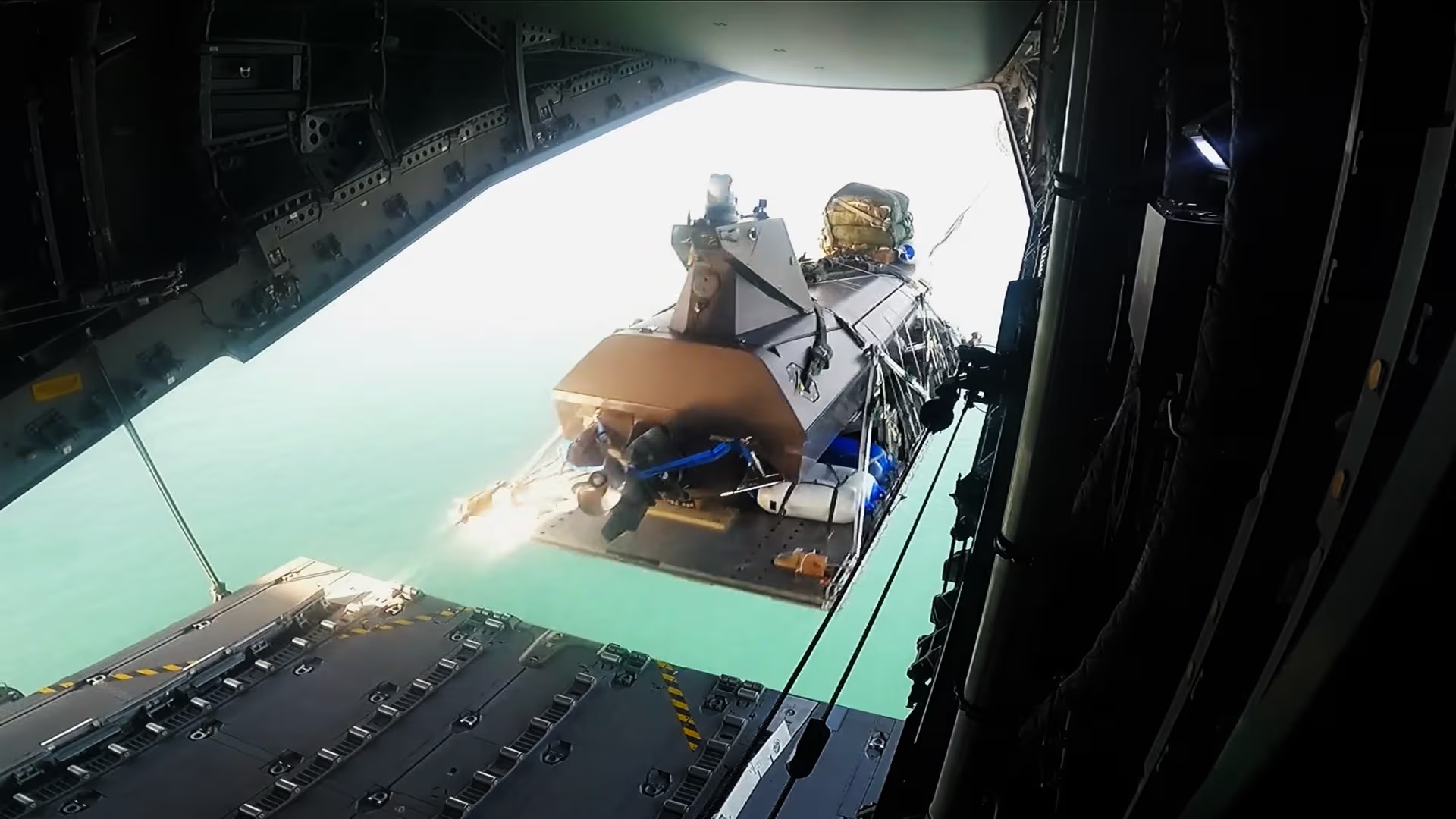
UK firm Kraken Technology Group and Connecticut-based Capewell have teamed up to pull off the first-ever airdrop of an uncrewed surface vessel (USV) from an A400M transport aircraft.
During a series of tests, Kraken’s K3 SCOUT USV was repeatedly deployed from Capewell’s Universal Maritime Craft Aerial Delivery System (UMCADS) at altitudes of 1,300 feet (396 meters) in Sea State 4 conditions, where waves reach 4 to 8 feet (1.25 to 2.5 meters).
The demo combined the USV’s optional airdrop kit with UMCADS’ reusable parachute pallet system, which is designed as a general-use tool for airdropping different vessels into contested waters.
The tests confirm K3 SCOUT’s ability to be inserted directly by air and enter the water ready for operation, expanding the speed, range, and flexibility with which the Royal Navy can deploy uncrewed maritime platforms.
“Working in partnership with Capewell and the Royal Navy, we have demonstrated that K3 SCOUT can be rapidly deployed directly from a military transport aircraft into contested or difficult-to-access waters ready for operation,” said Kraken CEO and Founder Mal Crease.
“Kraken, alongside its partners and the Royal Navy, will continue to push boundaries to deliver novel and enhanced operational capabilities with our resilient, modular platforms.”
Mark Lavender, director of business development and training at Capewell, said the campaign validated the integration of a complex payload with UMCADS while showing how easily the system can be reconfigured for other mission-essential equipment, maritime or land-based.
“This was further validated in that we conducted 4 live airdrops in 6 working days with the same boat and platform during this campaign,” he said.
Force Projection Capabilities
The development also debuted a new IN-Release system, a configurable electro-mechanical release mechanism designed to enable reliable, synchronized load disconnect for a vessel separating from its parachute pallet.
It adds to the force projection capabilities the demonstration was intended to show, which could potentially change how high-performance naval vessels are brought into hard-to-reach maritime areas.
The tests were supported by the Royal Navy as part of Project Beehive, an initiative to accelerate the deployment of a hybrid naval fleet.