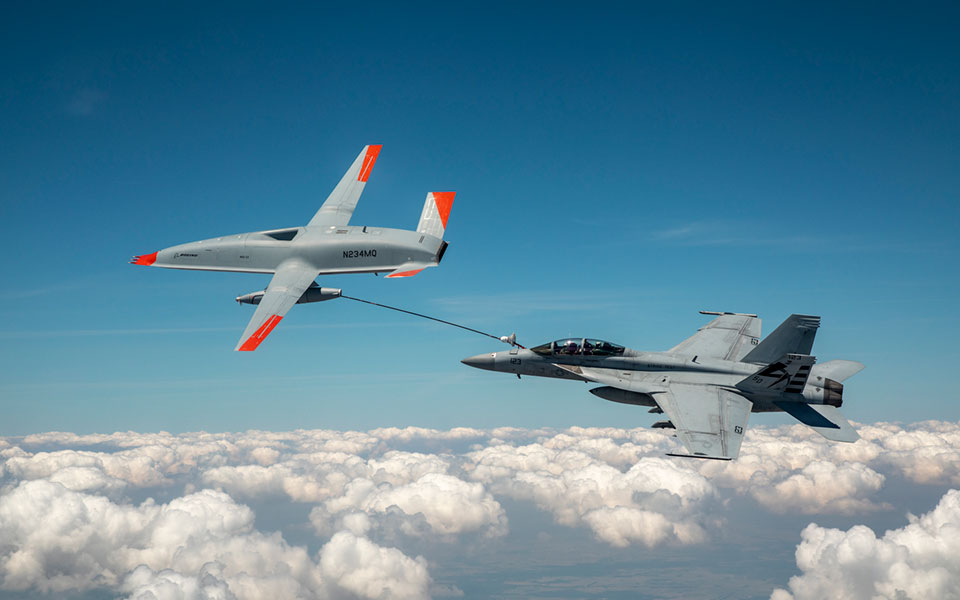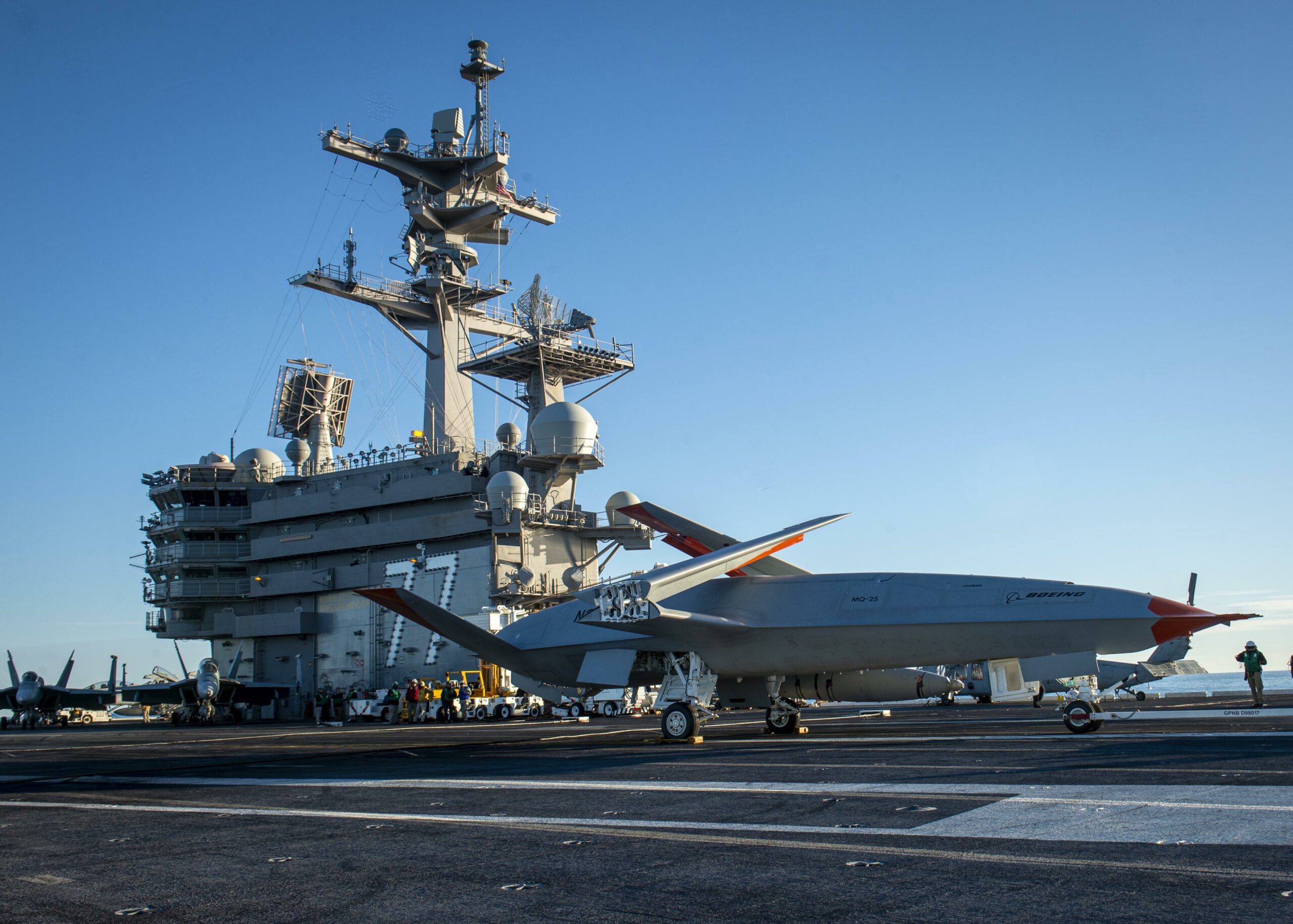
The US Navy has awarded Boeing a $562-million contract to begin low-rate initial production of the MQ-25A Stingray drone tanker.
The award moves the carrier-based uncrewed refueling aircraft from development toward operational service.
The deal funds three Lot 1 Stingrays and the advance acquisition of long-lead components for three Lot 2 aircraft.
The wider program could cover up to 76 Stingrays, while seven test aircraft are currently in assembly.
Boeing is expected to begin deliveries in 2029.
Freeing Super Hornets for Combat
The Stingray will take over aerial refueling missions currently assigned to the US Navy’s carrier-based F/A-18 Super Hornet fleet, freeing the fighters for combat operations.
The shift is expected to extend the reach of carrier air wings while reducing structural wear on the Super Hornet fleet.
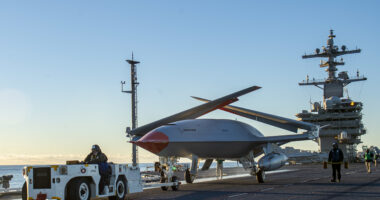
In March, the Nimitz-class aircraft carrier USS Theodore Roosevelt (CVN-71) became the first carrier equipped with an Unmanned Air Warfare Center capable of controlling the MQ-25A.
“Awarding this first [low-rate initial production] contract marks a pivotal transition from development to operational reality and is a testament to the focused effort of our joint government and industry teams,” said Capt. Daniel Fucito, program manager of Unmanned Carrier Aviation for the US Navy.
“MQ-25A will deliver the advanced reach, lethality, and survivability our warfighters need to outpace evolving threats and dominate the future battlespace.”
The MQ-25A Stingray
Boeing’s MQ-25A measures 51 feet (16 meters) long and has a wingspan of 75 feet (23 meters).
A Rolls-Royce AE 3007N turbofan powers the aircraft to speeds exceeding 500 miles per hour (805 kilometers per hour) and altitudes above 39,000 feet (11,887 meters). Its stated reach is up to 500 nautical miles (575 miles/926 kilometers).
For lethality, the drone tanker can deploy anti-ship missiles such as the AGM-158C.