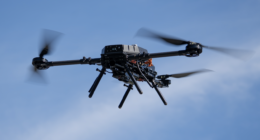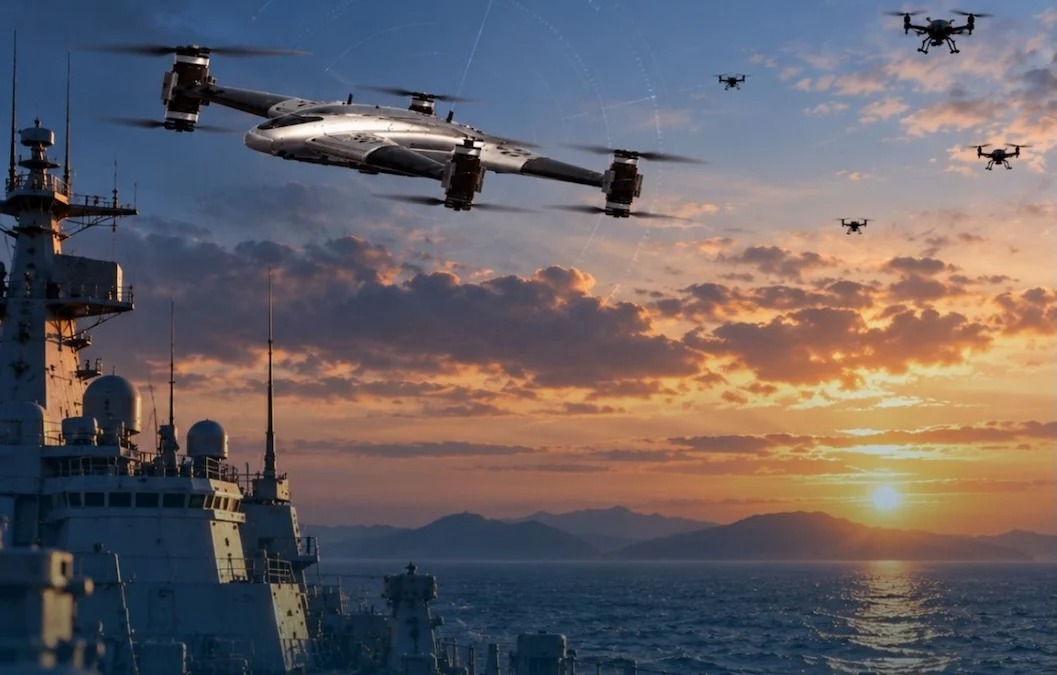
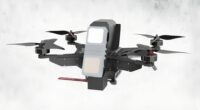
Ontario-based developer ZenaTech has announced the first full prototype for its “ZenaDrone 2000” autonomous interceptor is being built, with assembly underway at the company’s facility in the United Arab Emirates.
Following completion, a flight test is slated for early 2027, with a focus on validating takeoff, hover, and landing capabilities with full and partial payload capacity.
The company will also trial the interceptor’s 4-hour mission endurance and its 360-degree detection system, while additional tests will be conducted for autonomous navigation.
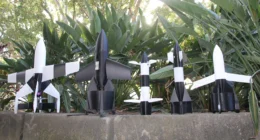
Future iterations of ZenaDrone 2000 are expected to add autonomous threat pursuit capabilities along with multi-target engagement and coordination with the company’s Interceptor P-1 system.
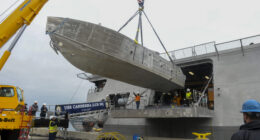
For maritime domains, the new interceptor will also eventually be compatible with ZenaDrone’s IQ Glider marine launch and refueling station.
ZenaTech’s ‘Largest, Most Capable Aircraft’
The gas-powered system is described as being part of an integrated defense architecture, featuring bench-tested 36-inch (91-centimeter) propellers and a folding arm structure.
It is envisioned as addressing a gap between small and single-use interceptors, acting as a long endurance capability that can operate over critical sites for multiple hours.
Meanwhile, ZenaDrone 2000’s 40-kilogram (88-pound) payload supports heavy sensors and a range of counter-drone effectors.
“The ZenaDrone 2000 is the largest and most capable aircraft we have built, and we are taking the time to get the prototype right before it flies,” ZenaTech CEO Shaun Passley, PhD said.
“Militaries, navies and border agencies need counter-drone systems that can stay on station for hours and respond to many threats at once, at a cost they can field at scale.”