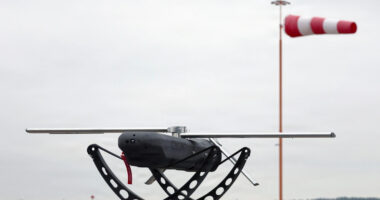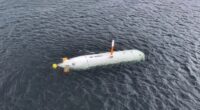
US defense company Shield AI has delivered the first of 13 V-BAT drones to Taiwan’s Coast Guard Administration (CGA), with the remaining 12 units expected to arrive over the coming months.
The V-BAT will operate from ships, supporting maritime surveillance, coastal patrols, and law enforcement missions, according to Shield AI.
The drone’s vertical takeoff and landing capability allows it to operate without conventional runways, giving the coast guard greater flexibility to launch missions from vessels and other confined locations.
Shield AI will also train CGA operators to use the system and establish local support capabilities with Taiwan’s Aerospace Industrial Development Corporation (AIDC).
“V-BAT will give Taiwan’s Coast Guard the maritime domain awareness and intelligence picture needed across the Taiwan Strait and its maritime borders,” said Shield AI President and Co-founder Brandon Tseng.
“V-BAT already does this for the US Coast Guard, helping intercept more than 100,000 pounds of narcotics last year alone. Extending those same capabilities to Taiwan helps keep the Strait safe from illegal activity and hostile actors.”
Strengthening the Taiwan Partnership
The delivery follows V-BAT’s participation in Taiwan’s Shipborne UAV program, a CGA procurement initiative focused on maritime security and defense.
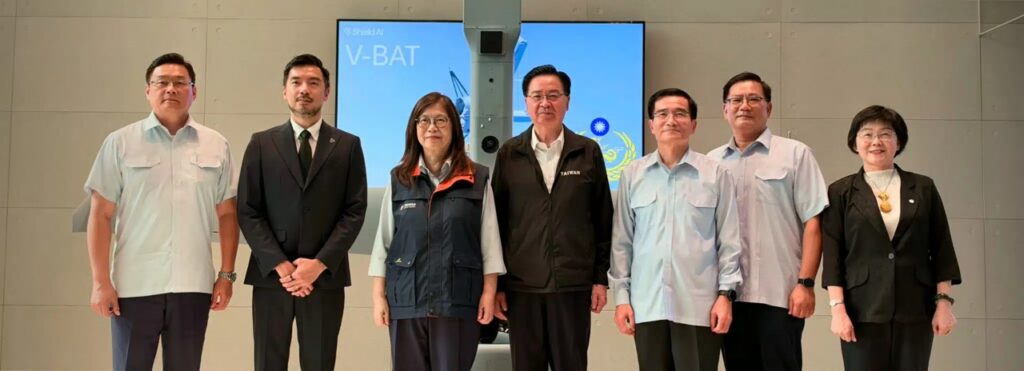
Upon the drone’s arrival in Taiwan, it was presented to Ocean Affairs Council Minister Kuan Bi-Lin and National Security Council Secretary General Joseph Wu.
Shield AI engineers prepared the drone for operation within minutes, demonstrating how quickly the system can be set up for maritime security missions.
“Shield AI has strengthened its local presence and footprint in Taiwan over the past year and consistently shown its willingness to integrate, sustain and support advanced autonomous systems in Taiwan with local partners,” AIDC President Jennifer Chuang said.
“This gives us the reassurance that it is not just delivering a capability but is also vested in helping build the local expertise and infrastructure that will enhance our maritime security for years to come.”