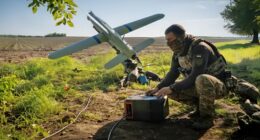
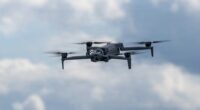
Canadian drone developers are looking to conduct more testing outside the country because federal laws limit their ability to test whether their drones can withstand radio jamming.
The country’s Radiocommunication Act prohibits anyone from installing, using, possessing, manufacturing, importing, or selling a radio-signal jammer.
Although exceptions exist for the military and its suppliers, private firms such as Ontario-based Sentinel R&D have limited opportunities to test their drones against electronic warfare systems because of the legislation.
The restrictions raise questions about how effectively Canadian defense firms can evaluate their systems for real-world missions, with few practical ways to conduct testing against realistic electronic warfare threats.
“Canada will not be able to produce anything that is effective in combat until we can test against jamming systems,” Sentinel CEO Kath Intson told The Logic. “There is no practical pathway right now for a Canadian electronic warfare company.”
Circumventing Prohibitions
To work around the restrictions, Sentinel has turned to foreign industry partners as potential hosts for drone testing facilities.
Intson said the company has already supplied its fixed-wing drone systems to an undisclosed firm in Texas for a series of tests.
The company also finalized a deal with Ukrainian developer Airlogix, allowing it to manufacture military-proven drones in Canada while selling its own systems to the Ukrainian military.
Additionally, Intson has expressed interest in Latvia as another potential location for drone testing, pointing to the country’s large electronic warfare testing range.
Addressing the Gap
The Aeronautics Act creates another obstacle for counter-drone testing in Canada by prohibiting civilians from physically stopping an aircraft with a projectile, laser, or net.
Although the Canadian government has issued exceptions for drones, regulations implementing those changes have yet to be finalized.
Lt.-Col. Nicolas Verreault, head of Canada’s central military drone authority, said the Canadian Armed Forces are working on solutions, including expanding exemptions under both the Radiocommunication and Aeronautics Acts for established drone developers.
The military is also reportedly planning to open test sites that private manufacturers could use, allowing them to evaluate counter-drone measures safely within the existing legal framework.