Boeing has introduced a series of upgrades to its MQ-28 Ghost Bat unmanned combat aircraft, aimed at increasing payload capacity and expanding mission flexibility.
The updated design now features a wingspan increased by 25 percent, creating capacity for an additional 2,000 pounds (907 kilograms) of fuel and mission payload.
It can also be configured to carry either two AIM-120 air-to-air missiles or four small diameter bombs in an internal weapons bay.
Instead of a fixed setup, the MQ-28 now uses an open-standard architecture that allows operators to integrate different weapons, sensors, and control systems depending on mission requirements.
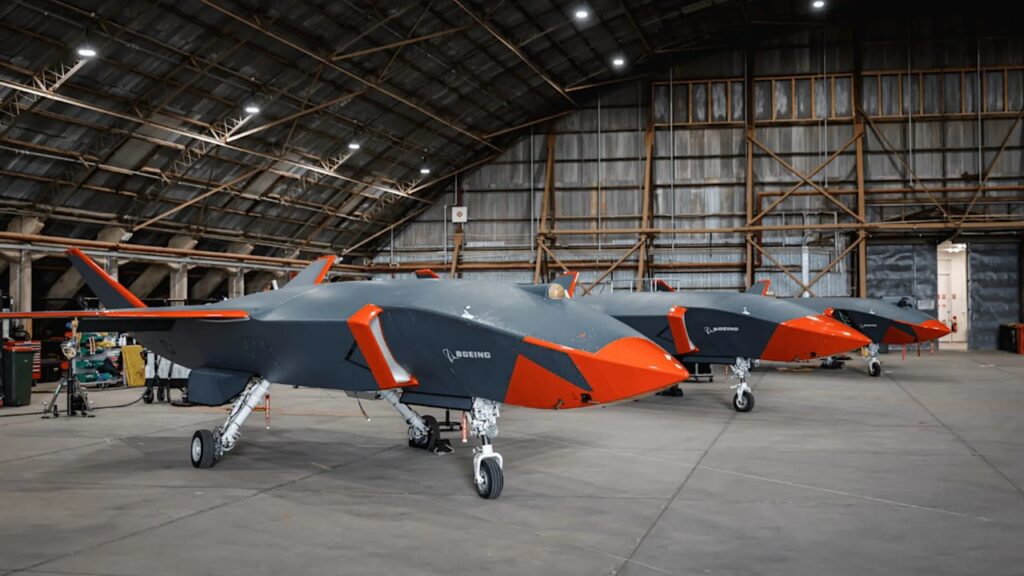
A new modular nose section also enables rapid swapping of sensor and mission packages.
“These features, developed in partnership with the Royal Australian Air Force, will be progressively released to the fleet through a spiral upgrade program, and are available to interested allied countries,” MQ-28 Global Program Director Glen Ferguson said.
Hiding Operators From Enemies
Boeing said the MQ-28 can now operate via satellite-based beyond-line-of-sight (BLOS) links, separating the operator from the aircraft’s immediate battlespace.
This allows forces to control the drone from platforms such as crewed fighter jets, naval vessels, or ground stations with satellite connectivity.
By masking the operator’s location, BLOS reduces exposure to retaliation, even as the drone operates forward in contested environments.
“The advanced maturity of the MQ-28 systems is what allows us to continually adapt to the changing operational environment and minimize the risk as we transition to operations,” said Amy List, vice president and managing director of Boeing Defence Australia.
“Combined with the MQ-28’s confirmed low observability characteristics and survivability upgrades, these capability enhancements support more flexible mission concepts and further allow defense customers to distribute operational risk.”