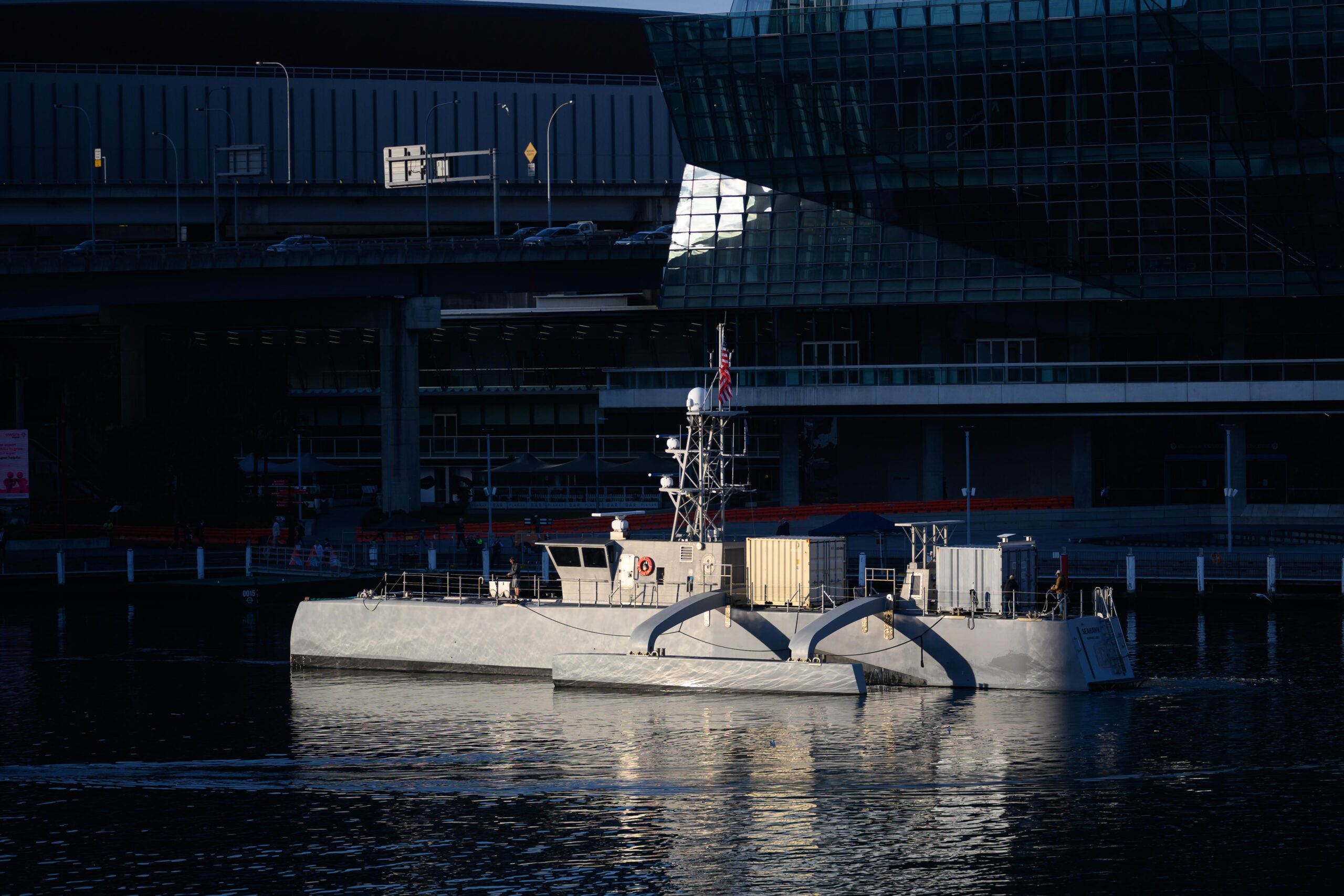

Australia, the UK, and the US have launched a joint program to develop advanced technologies for unmanned underwater vehicles, marking the first major initiative under the AUKUS Pillar 2 strategy.
Announced by defense ministers of the trilateral partnership in Singapore, the effort will focus on developing shared payloads, including sensors and mission systems, that can be integrated across allied underwater drone fleets.
Deployment Expected by 2027
The program is aimed at improving interoperability between the three nations while expanding capabilities for maritime surveillance and strike operations.
It is also expected to support the detection of threats to critical undersea infrastructure, such as communications cables and energy pipelines, as well as the transition toward a “hybrid navy” combining crewed vessels with autonomous systems.
Initial capabilities under the program could enter service as early as next year, with broader deployment planned for 2027.
UK Defence Secretary John Healey said the initiative reflects a shift toward faster delivery of advanced military systems.
“We are announcing ground-breaking underwater capabilities that will keep Britain safe,” he stated. “We’re stepping on the accelerator to develop cutting-edge tech to boost our collective deterrence and support our shared security.”
About Pillar 2 Framework
Pillar 2 of AUKUS focuses on the development of next-generation technologies in parallel with nuclear-powered submarine production under Pillar 1.
It includes areas such as artificial intelligence, cyber, electronic warfare, hypersonics, counter-hypersonics, information sharing, and quantum solutions.
“The maritime domain is increasingly contested, with growing risks to critical infrastructure and the security of global trade,” commented David Nockels, Australia’s first assistant secretary for defense trade, regulation, and AUKUS advanced capabilities.
“This project demonstrates how AUKUS can deliver advanced capabilities at pace in response to those challenges.”