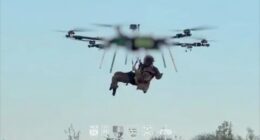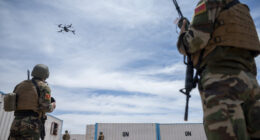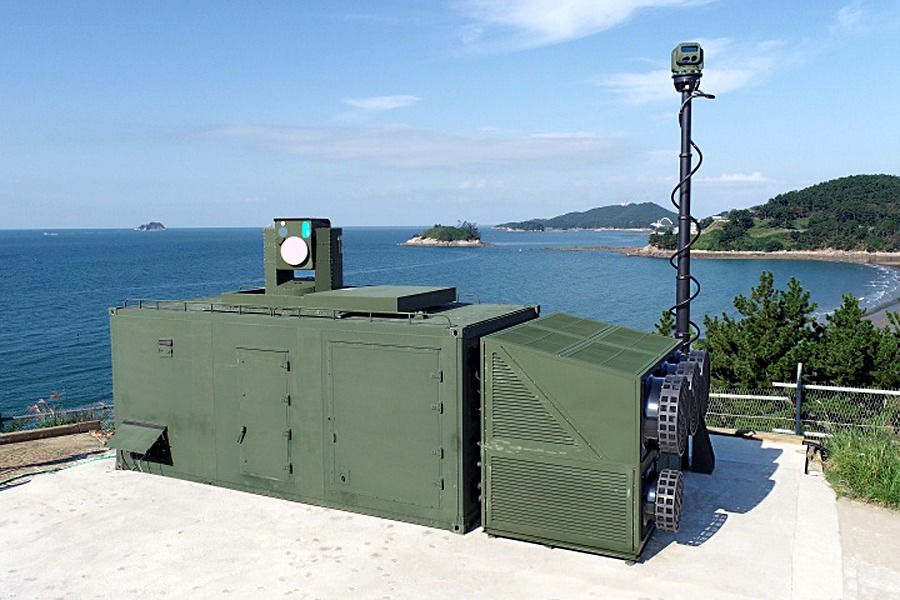
South Korea’s Cheongwang laser weapon successfully took down three drones during an exercise with the Republic of Korea (ROK) Army, demonstrating its maturity as an air defense system.
Developed by Hanwha Systems, Cheongwang is described as the world’s first operationally fielded laser weapon system.
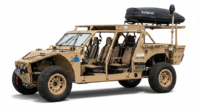
It was demonstrated alongside a vehicle-mounted high-energy laser cannon, with both systems reportedly achieving a 100 percent interception rate during the trial.
The exercise forms part of a military initiative to evaluate ways to counter small unmanned aerial threats, according to Hanwha.
Unlike conventional air defense weapons, which typically expend a missile or ammunition for each engagement, laser weapons can engage targets using directed energy as long as sufficient power is available.
This could make them useful against drones conducting reconnaissance or carrying out attacks, particularly when forces face repeated aerial threats.
Hanwha said each Cheongwang engagement costs approximately $1.50, potentially offering a lower-cost alternative to missile- and ammunition-based defenses.
A Growing Track Record
Cheongwang took part in the ROK Army’s Army TIGER+ Future Warfare Integrated Combat Exercise, which drew more than 500 attendees, including military officials, academics, and defense industry representatives.
The demonstration followed an appearance at the 2026 Defence Drone Technology Exhibition, where the system reportedly engaged six drones.
“Laser weapons are core assets that will fundamentally change the game of air defense,” said Joohun Shin, head of the Laser Systems Business Center at Hanwha, as quoted by Army Technology.