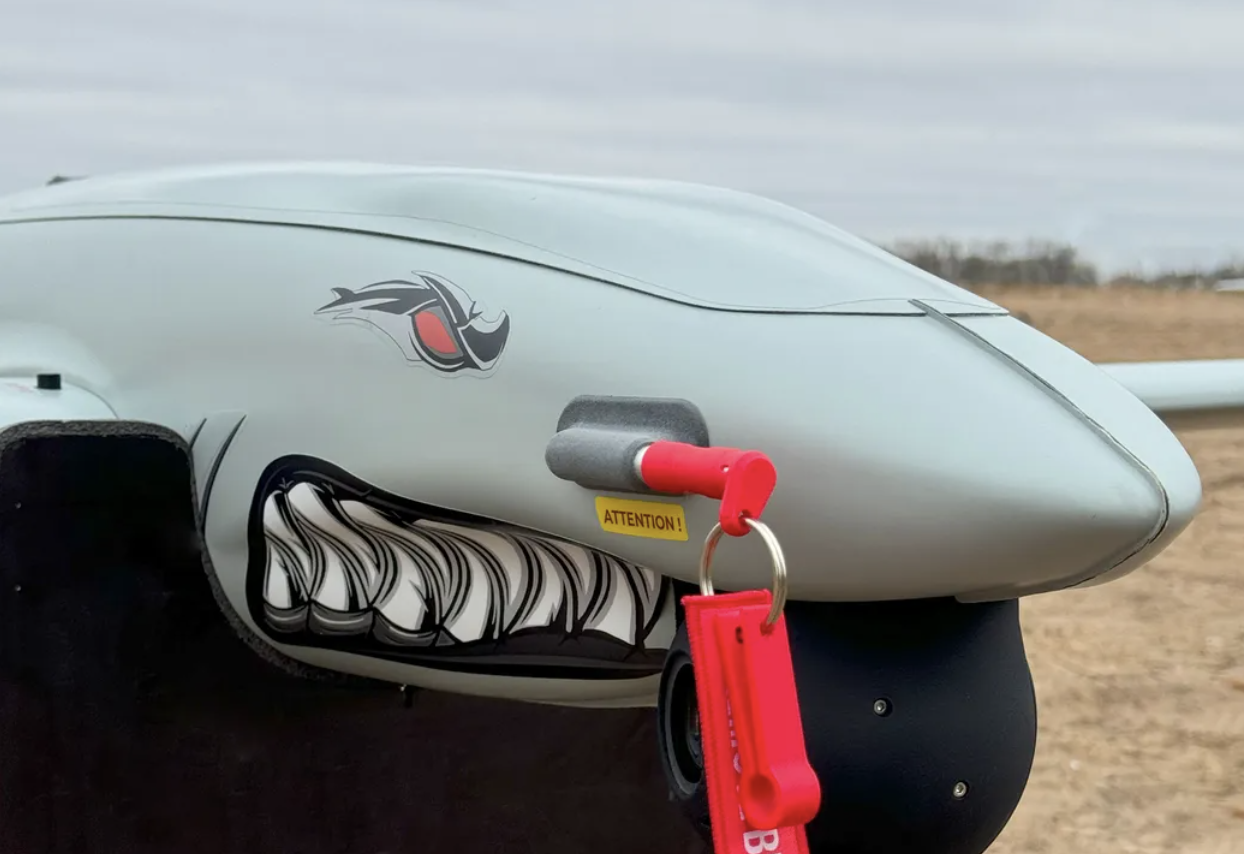

A Kyiv-based firm has developed a new Shark-M unmanned aerial vehicle (UAV) variant capable of launching even when satellite navigation signals are unavailable.
The upgraded drone from UKRSPECSYSTEMS features GNSS-denied launch algorithms that rely on onboard sensors to maintain navigation accuracy during the initial phase of flight.
Once airborne, it switches to optical navigation, matching live video feeds against satellite imagery to determine its position in real time.
The optical navigation system is supported by four new onboard image processing modes tailored for different operating conditions.

An even lighting mode enhances contrast to make small objects stand out more clearly, while a shadow enhancement mode improves visibility in dark areas without overexposing brighter regions.
A twilight mode preserves image detail in low-light conditions by increasing the camera’s exposure time and reducing noise. Meanwhile, an anti-fog mode sharpens edges and object boundaries to improve visibility in low-contrast environments.
Technical Specs
The Shark-M can remain airborne for up to seven hours, with a communications range of 180 kilometers (112 miles) and a mission range exceeding 420 kilometers (261 miles).
It also features an upgraded electro-optical system capable of detecting targets at distances of up to 35 kilometers (22 miles) during the day and 14 kilometers (9 miles) at night, while providing continuous 360-degree camera coverage.
According to UKRSPECSYSTEMS, the drone is also integrated with the Ukhyliant sensor system, enabling it to perform evasive maneuvers against interceptor drones.