US intelligence agencies are investigating whether Russia helped Iran target Central Intelligence Agency (CIA) facilities in the Persian Gulf by providing intelligence or advanced drone technology, according to Reuters, citing sources familiar with the matter.
Officials have not reached a final assessment but are examining the precision of the attacks and Russia’s long-standing military cooperation with Tehran.
The previously undisclosed investigation follows Iranian drone strikes in March that hit at least two CIA facilities, including the agency’s station inside the US Embassy in Riyadh and another in eastern Iraq.
Sources said additional CIA sites may have also been targeted but declined to provide further details.
‘Fake News’
A separate, undisclosed Western intelligence assessment reportedly concluded that Russia likely played a role in the targeting of CIA facilities in the region.
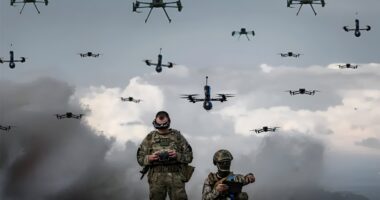
Two officials briefed on the dossier said the Riyadh attack appeared to involve two Russian-enhanced Shahed drones.
According to the officials, one drone breached the embassy compound’s outer wall before a second aircraft flew through the opening and exploded inside but left no casualties.
Investigators are also examining whether Iran leveraged Russian targeting data to improve the effectiveness of the strikes.
The Kremlin has denied previous allegations that it provided technology to improve Iranian-designed Shahed-136 drones, calling such claims “fake news.”
Reports had alleged that Moscow supplied the drones with its Kometa-M satellite navigation system, which experts say could improve accuracy and increase resistance to jamming.
Common Interest a Key Factor
Analysts cautioned that the CIA station may not have been the intended target and could have been hit because it is housed within the embassy compound.
Former CIA station chief Daniel Hoffman said deeper cooperation between Moscow and Tehran would not be surprising, noting that both countries “share an interest in trying to reduce or eliminate US influence altogether in their self-designated spheres of influence.”