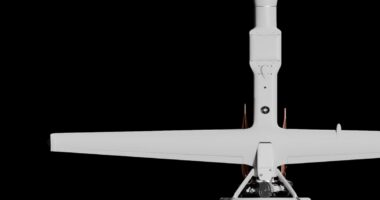
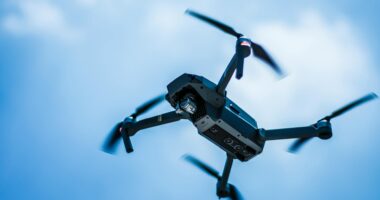
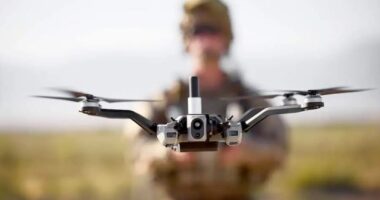
US Special Operations Command (USSOCOM) has launched a competitive effort to acquire a synthetic data generation tool that will train computer vision (CV) models for unmanned systems.
In partnership with Florida-based nonprofit SOFWERX, the initiative aims to improve how drones spot, analyze, and track targets across air, ground, and maritime domains using artificial intelligence and machine learning.
The requirement falls under the Unmanned Systems Autonomy and Interoperability (UxSAI) program, managed by the Program Executive Office for SOF Digital Applications, which assembles and deploys solutions to improve coordination of heterogeneous unmanned platforms.
“Training high-performance CV models requires large volumes of labeled, operationally relevant … imagery,” USSOCOM said in a notice, adding that real-world data collection is often constrained by cost, accessibility, and operational challenges.
“Synthetic data generation addresses this gap by producing labeled datasets that simulate operational variability without real-world acquisition constraints.”
Vetting Process Begins in June
USSOCOM said it is seeking a capability that warfighters can operate independently without vendor oversight.
The system must generate electro-optical/infrared imagery and integrate with the program’s existing machine learning operations pipeline.
The selection process will proceed in phases. After a June 29 white paper submission deadline, proposals will be screened ahead of a mid-July assessment event where selected industry teams will demonstrate their offerings.
A further downselect will follow, leading to testing and evaluation in September within the UxSAI framework.
The command expects to choose a single vendor in October and begin contract negotiations for official development and delivery.