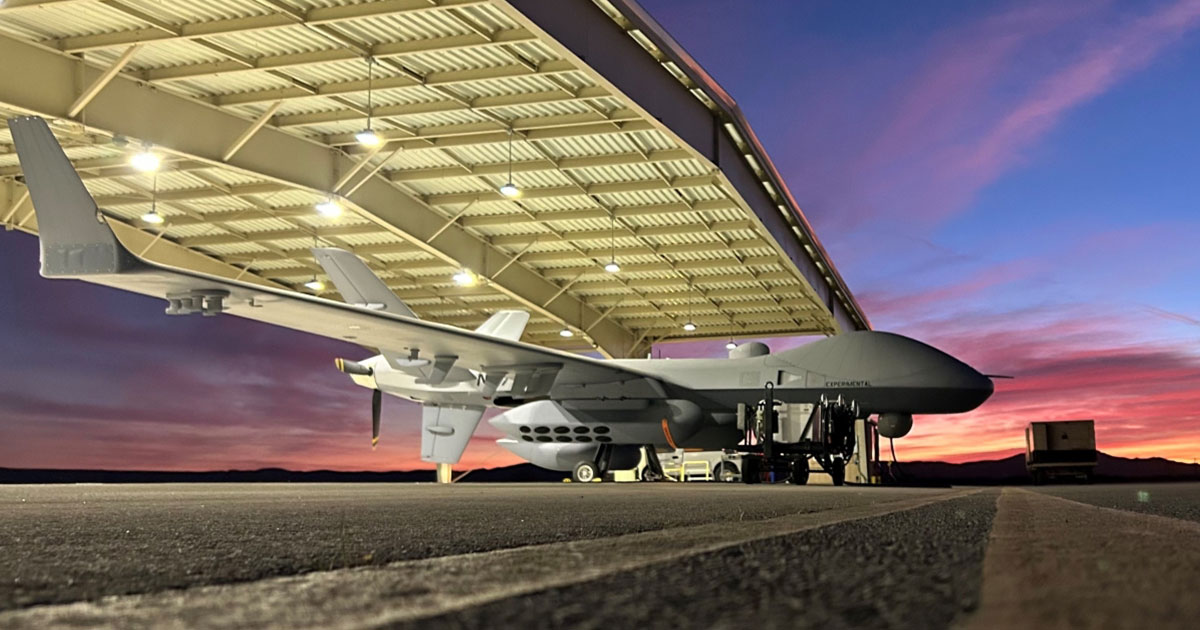

The US Navy is exploring how the MQ-9B SeaGuardian drone could expand maritime intelligence, surveillance, and reconnaissance (ISR) across the 7th Fleet.
Operated under a Company-Owned, Company-Operated arrangement with General Atomics Aeronautical Systems (GA-ASI), the maritime-optimized Group 5 remotely piloted aircraft provides long-endurance surveillance and can support missions including anti-submarine warfare.
Navy personnel and industry representatives recently examined SeaGuardian at Naval Air Station Whidbey Island in Washington, as the service continues assessing the aircraft as a potential force multiplier for its Maritime Patrol and Reconnaissance Force.
Expanding Maritime ISR
SeaGuardian provides persistent airborne sensing, giving naval forces another platform for monitoring large maritime areas while reducing the need to use crewed aircraft for some surveillance missions.
The navy has already employed the aircraft during exercises including Northern Edge and Integrated Battle Problem, as well as carrier pre-deployment workups.
These activities have helped the service assess how the MQ-9B could augment existing maritime patrol operations.
Operating SeaGuardian alongside platforms such as the P-8A Poseidon could expand the navy’s coverage while allowing crewed aircraft to focus on missions that require onboard personnel and more complex capabilities.
GA-ASI Vice President of Department of Defense Strategic Development Patrick Shortsleeve said the Whidbey Island event provided an opportunity to showcase SeaGuardian alongside the Poseidon and demonstrate that the “future focused capability is here now and ready for employment.”