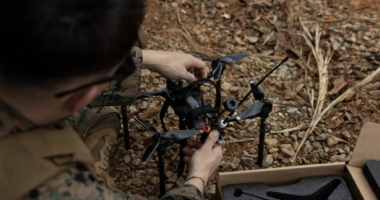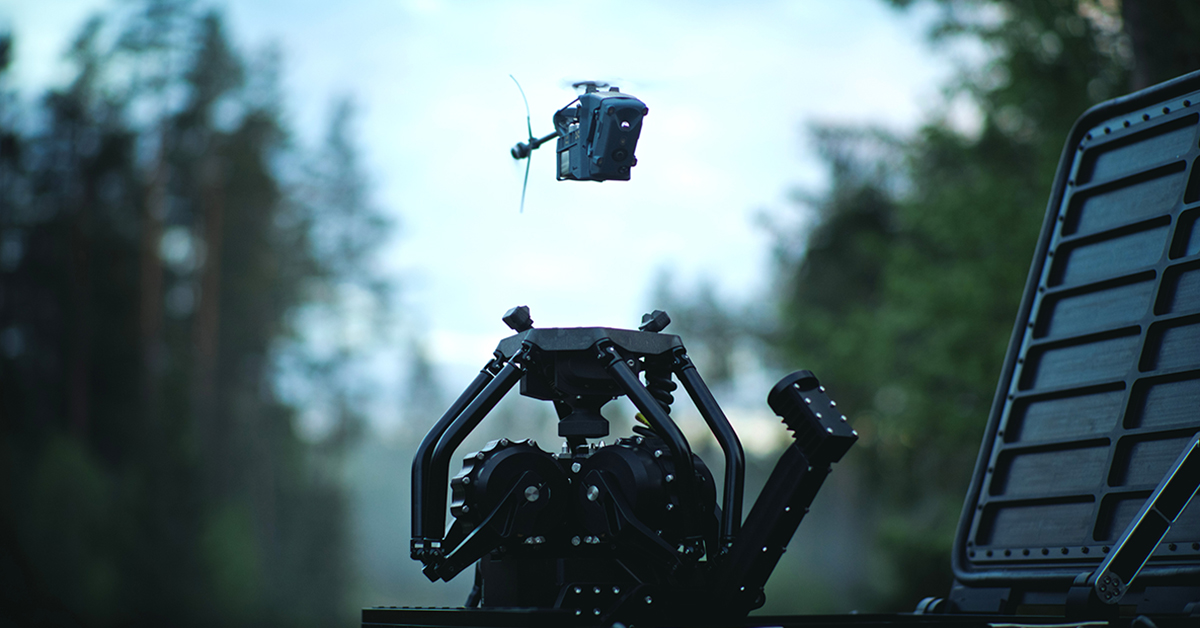
Teledyne FLIR Defense has introduced a new micro-drone designed to provide vehicle crews with organic airborne reconnaissance without relying on dedicated drone teams.
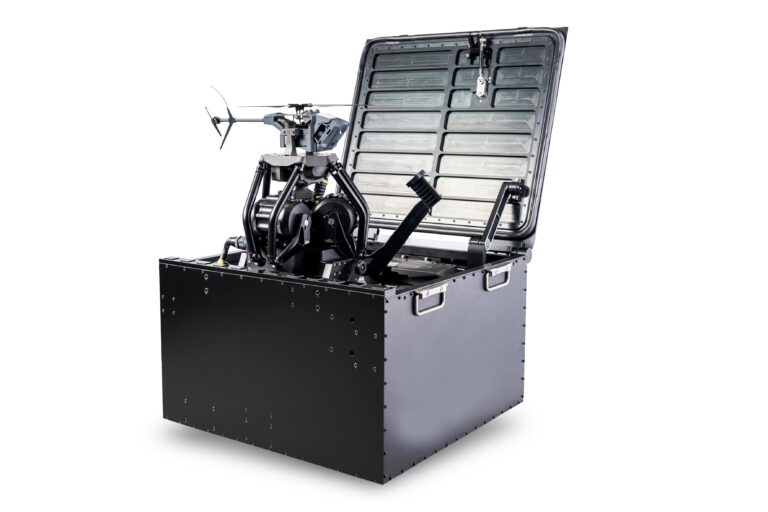
Called Black Recon, the platform is built around a launcher that can manage multiple small unmanned aircraft, allowing operators to maintain aerial observation while remaining inside their vehicle.
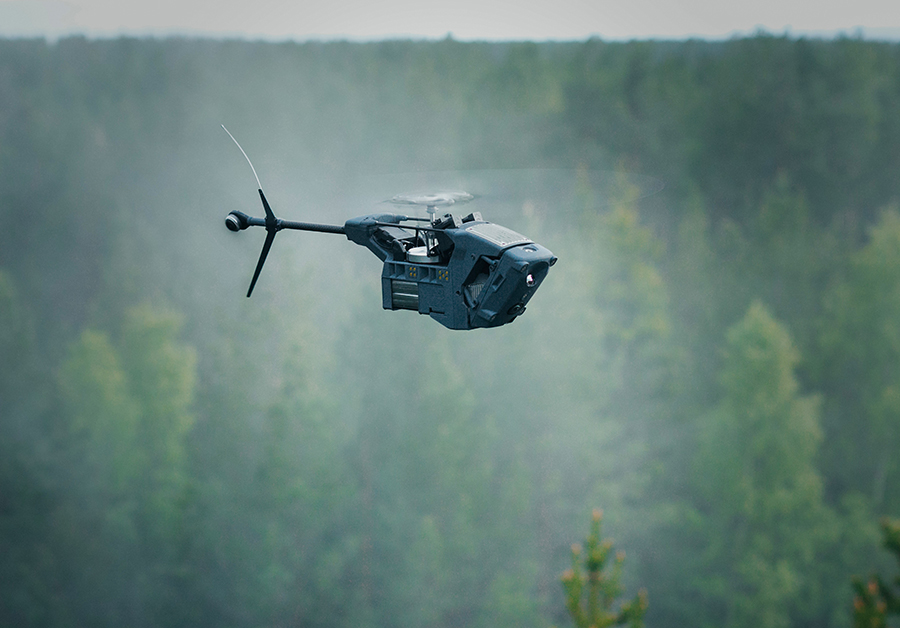
The drone weighs less than 450 grams (15.9 ounce) and can stay airborne for nearly an hour, carrying day and thermal imaging sensors to support surveillance and target identification missions.
According to the company, Black Recon draws on technologies developed for its smaller unmanned systems and is intended for military and security applications.
Potential uses include infrastructure protection, maritime monitoring, border security, and emergency response support.
“By bringing autonomous launch, recovery, and recharging directly to the vehicle, we give operators persistent situational awareness, faster access to actionable intelligence, and greater protection in high-tempo missions,” said Dr. JihFen Lei, president of Teledyne Defense and Aerospace Group.
Operations in GPS-Denied Areas
A key feature of Black Recon is its ability to continue operating when satellite navigation signals are unavailable or jammed.
The drone combines onboard sensors with visual navigation tools that allow it to maintain awareness of its surroundings without relying entirely on GPS.
It can also conduct missions with minimal radio-frequency emissions using Visual Inertial Navigation, a capability intended to support operations where communications may be disrupted or monitored.
According to Teledyne, the coordinated use of multiple aircraft enables sustained aerial coverage, helping units maintain situational awareness over an area for extended periods.
Expandable Payload Options
Black Recon can operate alongside the company’s Black Hornet 4 nano-drone and is designed to accommodate additional mission equipment as operational requirements evolve.
Future payload options are expected to include specialized sensors for hazardous-material detection and other mission-specific tasks.
The drone is currently available for procurement, with initial deliveries expected to begin in 2027.