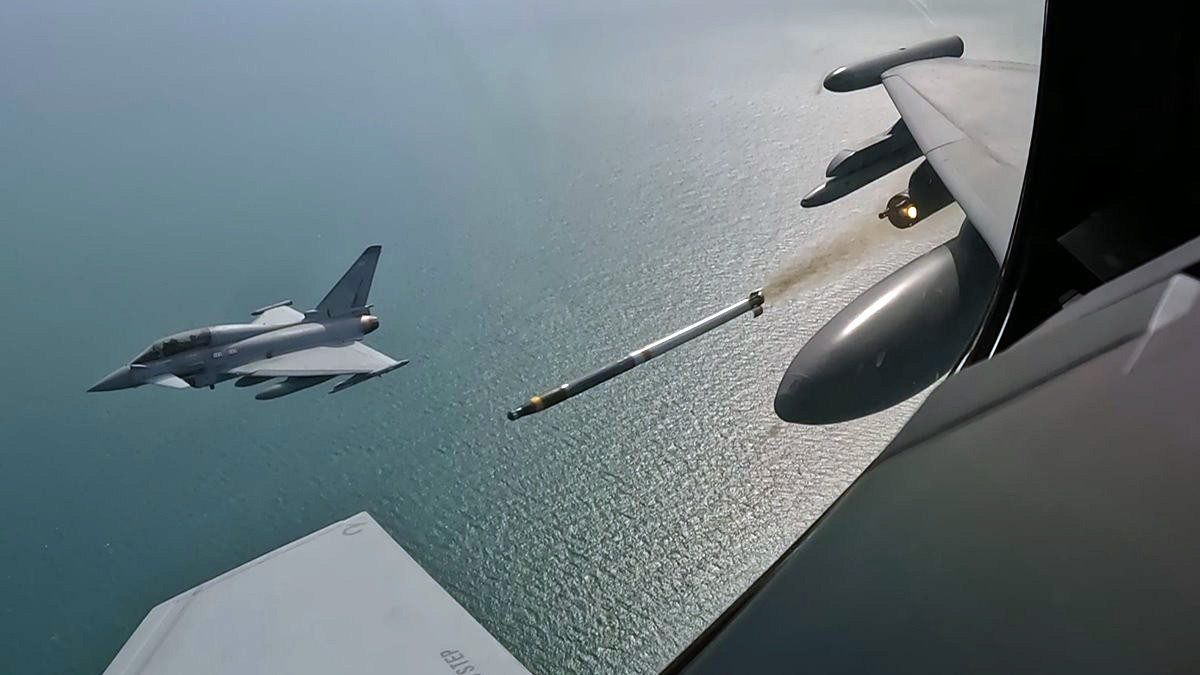
Image of a RAF Typhoon aircraft, seen here firing the Advanced Precision Kill Weapon System (APKWS). Air-to-air live firing of the APKWS system, was carried out during trials in the UK in April 2026 by 41 Test and Evaluation Squadron. British citizens and regional partners will be better protected against drone attacks as the Royal Air Force deploys a new low-cost anti-drone weapon on operations in the Middle East. The new Advanced Precision Kill Weapon System (APKWS) will be fitted to RAF Typhoon fighter jets so that they can destroy targets precisely and at a fraction of the price of missiles currently used. Rapid procurement and testing work by the Ministry of Defence and industry partners BAE Systems and QinetiQ has enabled the system to move from testing to deployment on operations in less than two months. March saw a successful test strike on a ground-based target, and RAF Typhoon pilots from 41 Test and Evaluation Squadron conducted successful air-to-air firing in April, demonstrating the system’s ability to defend against drone attacks. The system has now been deployed on operations in the Middle East with sorties flown by 9 Squadron RAF Typhoon fighter jets as part of the missions to defend British people, interests and partners from threats.
Typhoon aircraft firing the Advanced Precision Kill Weapon System (APKWS). Photo: 41 Test and Evaluation Squadron/UK Royal Air Force

The UK Royal Air Force has started operational use of a laser-guided counter-drone weapon on Eurofighter Typhoon combat aircraft deployed in the Middle East, bolstering defenses against unmanned aerial threats in the region.

The Advanced Precision Kill Weapon System (APKWS) converts unguided 70-millimeter rockets into precision-guided munitions designed to engage drones and lightly armored ground targets while limiting collateral damage.

Jets operated by No. 9 Squadron at RAF Lossiemouth in Scotland have been equipped with the system for what officials described as “defensive missions” linked to ongoing regional tensions.

Supporting ‘Backbone’ Fleet

London said the APKWS deployment followed an accelerated procurement and testing process that moved the capability from evaluations to fielding in less than two months.

Working with BAE Systems and QinetiQ, the government conducted a live-fire demonstration against a ground target in March 2026.

The system then completed an air-to-air test the following month, with benchmarks including performance against hostile drones.

“This has been a superb effort working with industry to test and deploy this system in a matter of months, which will help the RAF shoot down many more drones at a much lower cost,” UK Defence Readiness and Industry Minister Luke Pollard stated.

“Our Typhoon fleet is the backbone of UK and NATO air defence, with the RAF protecting [Europe’s] Eastern flank from Russian drone incursions and defending our partners across the Middle East.”
You May Also Like

Fortem, MBDA Teaming Up to Integrate Counter-Drone Systems Across Europe

Fortem and MBDA aim to bring autonomous drone interceptors into existing European air defense networks against one-way attack threats.

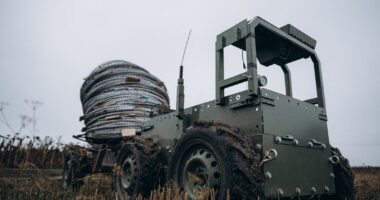
Ukrainian Ground Drones Take Over Risky Frontline Barrier Work

Ukrainian ground drones are laying frontline wire barriers remotely, keeping combat engineers out of exposed, dangerous areas.

Denmark to Roll Out Terma’s Integrated Counter-Drone Solution Across Military Branches

Terma will provide Denmark an AI-enabled command-and-control system integrating sensors and countermeasures for nationwide counter-drone defense.

Cuba Obtains Hundreds of Drones Amid Alleged Plans Targeting US Facilities: Report

Cuba acquired over 300 military drones from Russia and Iran, with alleged plans targeting US facilities.