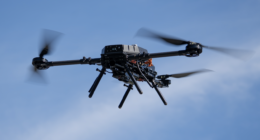
The Gambit unmanned combat air vehicle (UCAV) line from General Atomics Aeronautical Systems, Inc. (GA-ASI) is entering its sixth evolution, this time adding air-to-ground punch to a system long proven in the skies.
Dubbed Gambit 6, the new platform expands beyond air dominance to tackle electronic warfare, deep precision strike, and suppression of enemy air defenses.
According to GA-ASI President David R. Alexander, the drone can be fitted with varying levels of autonomy, along with modular sensors and weapon systems, giving it the flexibility to adapt to evolving battlefield threats.

The sixth iteration is expected to give air forces a new system that can carry out land strikes just as well as it can focus on air superiority.
The company said the Gambit 6 will be available to international partners by 2027, with European mission-ready versions to follow in 2029.
Evolving Family
GA-ASI has built its Gambit lineup to flex across mission profiles. The first variant is a long-endurance sensing platform, capable of staying aloft for extended surveillance and data collection.
The YFQ-42A, based on Gambit 2, pushed the concept further, positioned as an AI-powered stealth wingman designed to fly alongside crewed jets and carry out covert strikes for the US Air Force.
Gambit 3 was tuned for aerial dominance, while Gambit 5 swooped below the skies and carried out ship-based operations.

GA-ASI took a different route with the combat-focused Gambit 4, featuring a tailless, swept-wing design.
Now, Gambit 6 rounds out the evolution, essentially covering a wide set of battlefield needs to emerge as a top option for air-to-ground missions.
A Shared Core
All Gambit variants share a core foundation, from chassis and landing gear to avionics and architecture.
This approach cuts manufacturing costs and simplifies sustainment, with interchangeable parts across the fleet.
The shared foundational structure also gives GA-ASI a head start in developing new mission-specific variants should the need arise.