The US Army has found an unlikely ally in its fight to protect military aircraft.
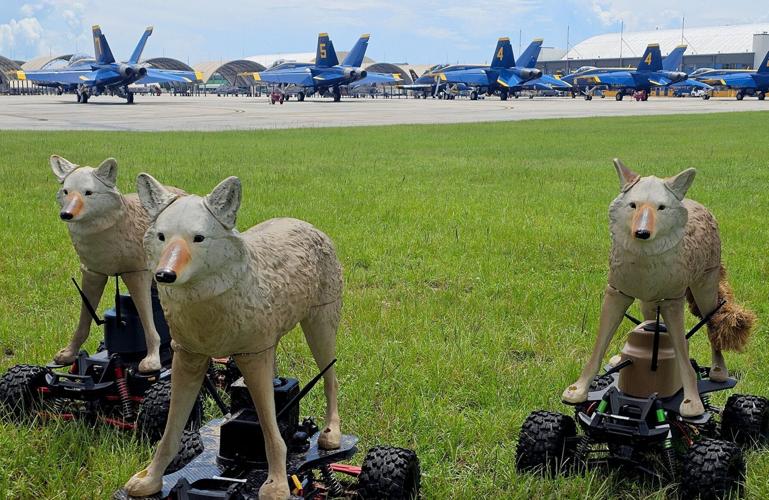
Its Engineer Research and Development Center (ERDC) has developed “coyote rovers,” four-wheeled motorized vehicles mounted with life-size coyote figures to help clear its airfields of any wildlife hazards.
The rovers are considered unmanned ground vehicles (UGV) and are capable of following designated paths while staying away from restricted areas such as runways.
They are supported by a charging and docking system, allowing these bots to operate autonomously for several days.
The base platform comes from Texas firm Traxxas, with motorized cars that can reach speeds up to 32 kilometers (20 miles) per hour. It is fast enough to mimic real predator behavior and keep curious wildlife at bay.
Early prototypes have already been demonstrated at several Naval Air Stations, with more testing expected this summer if funding is approved.
A Practical Fix?
Incidents of birds being sucked into plane engines and other animals such as rabbits and deers breaking equipment have caused military bases around $251 million worth of damages from 2007 to 2016, according to reports from the US Air Force.

Fighter jets and transport planes are especially vulnerable during takeoff and landing, when a single bird strike can disable an engine or force an aborted mission.
To mitigate those risks, the navy has used trained hawks, while the air force relies on specialized radars. The army still depends heavily on manual labor, which can be both costly and time-consuming.
At $3,000 per unit, the coyote rovers aim to offer a lightweight, affordable way to cut down wildlife-related incidents and keep critical aircraft safe and mission-ready.
According to ERDC research biologist Shea Hammond, the team is also exploring future upgrades, such as incorporating autonomous navigation and AI-based systems to detect specific bird species.