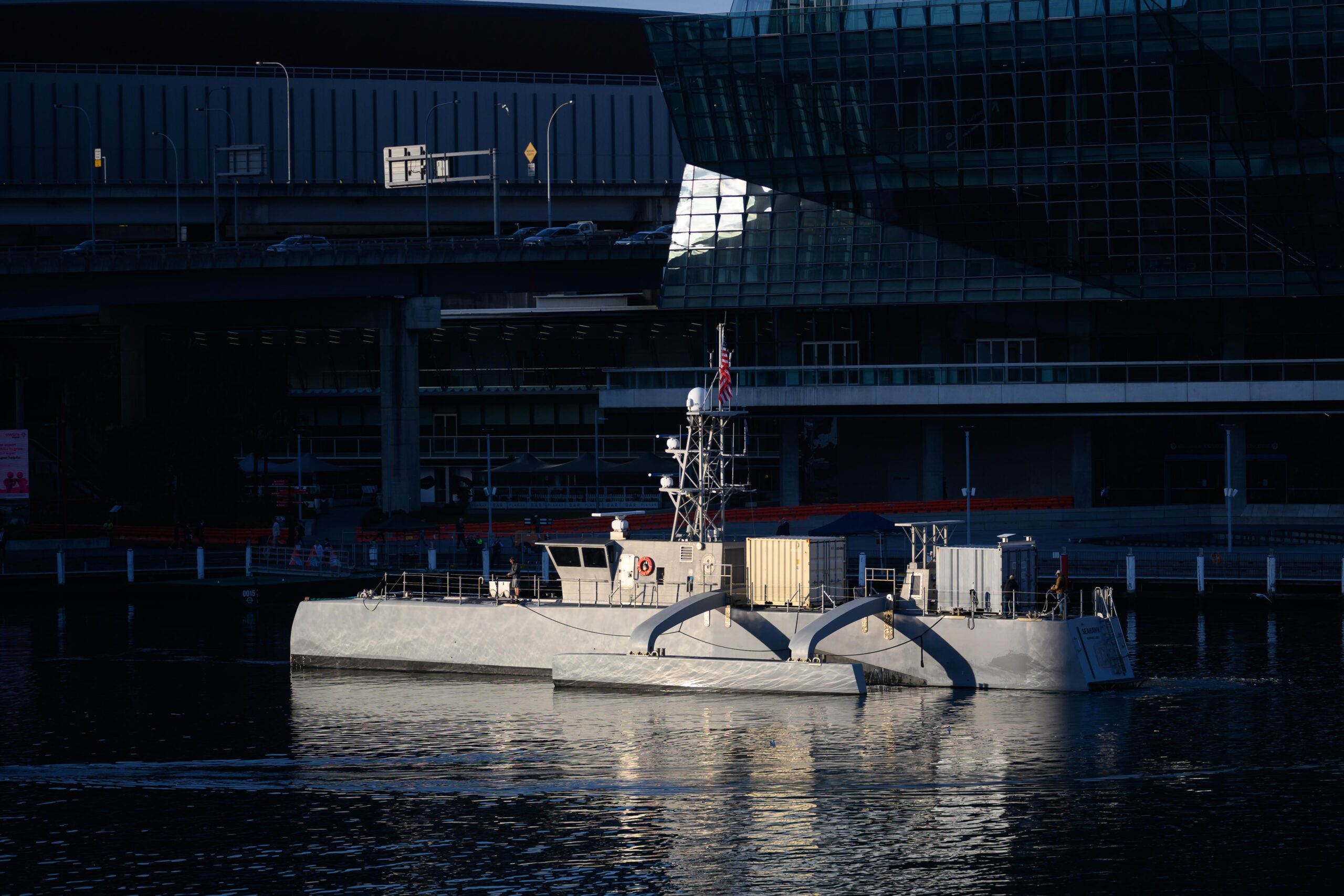
The UK Ministry of Defence is set to purchase uncrewed surface vessels (USVs), supporting plans to evolve the Royal Navy into a hybrid force combining crewed and uncrewed systems.
Fareham-based firm Kraken Technology Group clinched a 12.3-million-pound ($16.4 million) deal to supply 20 USVs for the navy, following the service’s November 2025 announcement of its plans to acquire such a fleet under Project Beehive.
Each domestically developed vessel features a Modular Open Systems Architecture to support future upgrades.
The systems will be operated by the Coastal Forces Squadron and 47 Commando as testbeds for training, tactical and warfare development, helping lay the groundwork for the service’s planned hybrid fleet.
Second Sea Lord Vice Admiral Paul Beattie called the investment a “significant milestone in our journey towards a Hybrid Navy.”
“By integrating cutting-edge autonomous technology with our existing capabilities, we are ensuring that our forces remain at the forefront of maritime innovation and warfighting effectiveness,” he added.
Hybrid Navy
In September 2025, First Sea Lord General Sir Gwyn Jenkins outlined plans to deploy crewed and uncrewed platforms on the Queen Elizabeth-class aircraft carriers.
He also highlighted that the service is seeking to launch the first jet-powered carrier-launched drone, which will fly alongside the F-35B and perform a range of kinetic and non-kinetic missions, by 2026.
In support of its efforts towards a hybrid force, a fleet of remotely controlled Rattler boats successfully escorted Royal Navy warships in a 72-hour trial off Scotland in October 2025.
“It is the first time we have been able to field a capable, mission ready, deployable uncrewed system at sea and it is the first major success for the Disruptive Capabilities and Technology Office,” Royal Navy Chief Technology Officer Jaimie Roylance said at the time.