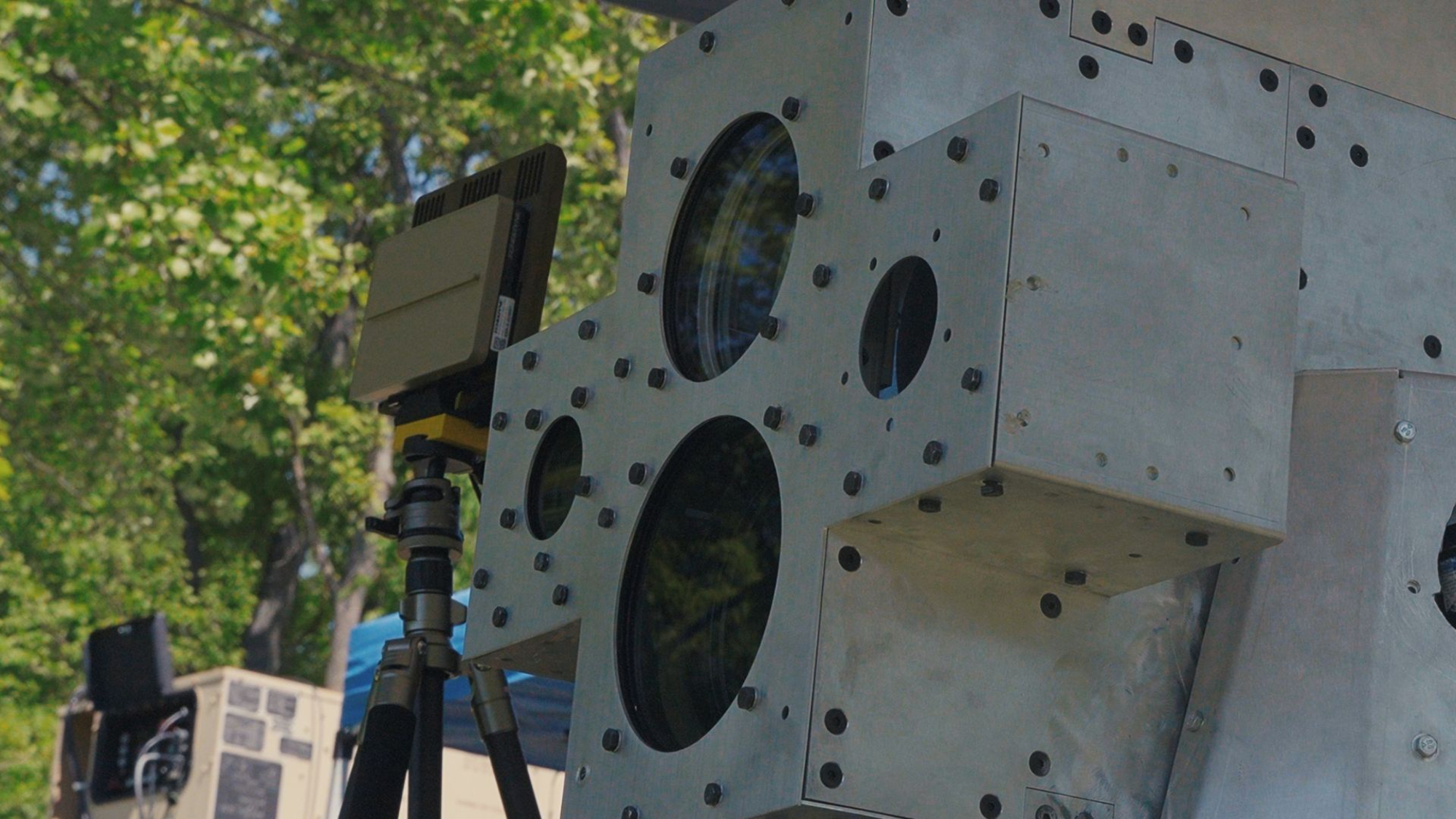
Aurelius Systems has completed live testing of its Archimedes autonomous directed-energy system for the Pentagon in Indiana, highlighting the laser weapon’s ability to negate unmanned aerial system (UAS) threats.
The event is part of a broader evaluation effort covering roughly 60 platforms identified for their potential to enhance warfighter protection, operational effectiveness, and support next-generation defense capabilities.
‘Powerful New Option’
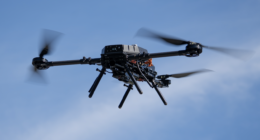
Held during an exercise at Camp Atterbury, the demonstration saw Archimedes engage over 20 quadcopter drones, as well as five US Army-supplied UAS, marking the system’s first exposure to military-provided targets.
The California-based company said the laser successfully neutralized the simulated threats, validating its readiness as a counter-drone instrument against evolving aerial risks and force protection requirements.
Archimedes combines high-energy output with advanced sensing to counter Group 1 and 2 UAS, or those weighing up to 1,320 pounds (599 kilograms) and capable of flying at speeds of up to 250 knots (288 miles/463 kilometers per hour).
It reportedly delivers repeated engagements at ranges past 1,000 meters (3,281 miles) with a low cost per shot, positioning it a scalable alternative to traditional interceptors.
“Archimedes … proved that autonomous directed energy systems are ready to play a meaningful role in modern air defense operations,” said Michael LaFramboise, CEO of Aurelius Systems.
“The ability to autonomously acquire, identify, track, and defeat aerial threats in a compact, [low size, weight, power, and cost] platform at a significantly lower cost than traditional systems provides America with a powerful new option for protecting military forces.”