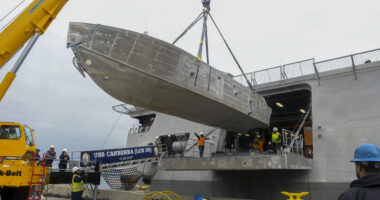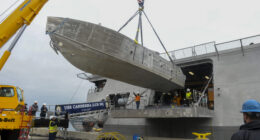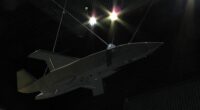
The US Navy has selected seven companies to advance to the at-sea testing phase of its Medium Unmanned Surface Vessel (MUSV) program, marking the next step in its effort to rapidly field autonomous maritime systems.
The initiative replaces the earlier Modular Attack Surface Craft program and shifts development risk to industry by prioritizing mission-ready platforms over government-funded prototypes.
The seven contenders, chosen from roughly two dozen submissions, are Leidos, Huntington Ingalls Industries, Saronic Technologies, Sea Machines, Birdon, Galliano Marine Services, and PacMar Technologies.
Sea trials are scheduled to begin this month and continue through October 2026.
Companies that successfully pass the demonstrations will receive $15 million and become eligible for follow-on production contracts, according to the US Navy.
Operational vessels are expected to be available for leasing or procurement by fiscal year 2027.
“This initiative represents a strategic shift in naval acquisition, designed to rapidly field unmanned technologies by leveraging mature, existing commercial solutions,” the navy stated.
MUSV Requirements
Sources said that the force plans to acquire 81 platforms in fiscal year 2031 under the MUSV program.
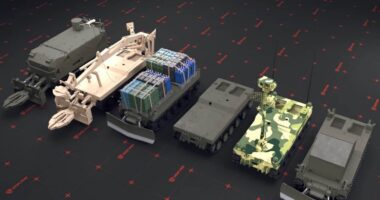
A key feature of the effort is the use of swappable payloads, allowing combat systems to move between manned and unmanned vessels without extensive redesigns.
Each MUSV must be capable of traveling 2,500 nautical miles (4,630 kilometers/2,877 miles) and reaching speeds of up to 25 knots (46 kilometers/29 miles per hour).
The platforms must also be able to withstand Sea State 4, or waves towering up to 2.5 meters (8.2 feet), while carrying as much as 25 metric tons (55,116 pounds) of cargo in at least two 40-foot (12-meter) shipping containers.
Additional requirements include operating without radio frequency emissions when directed, providing navigational recommendations, and functioning day and night across varying weather conditions.