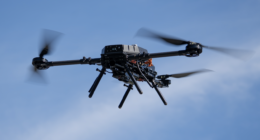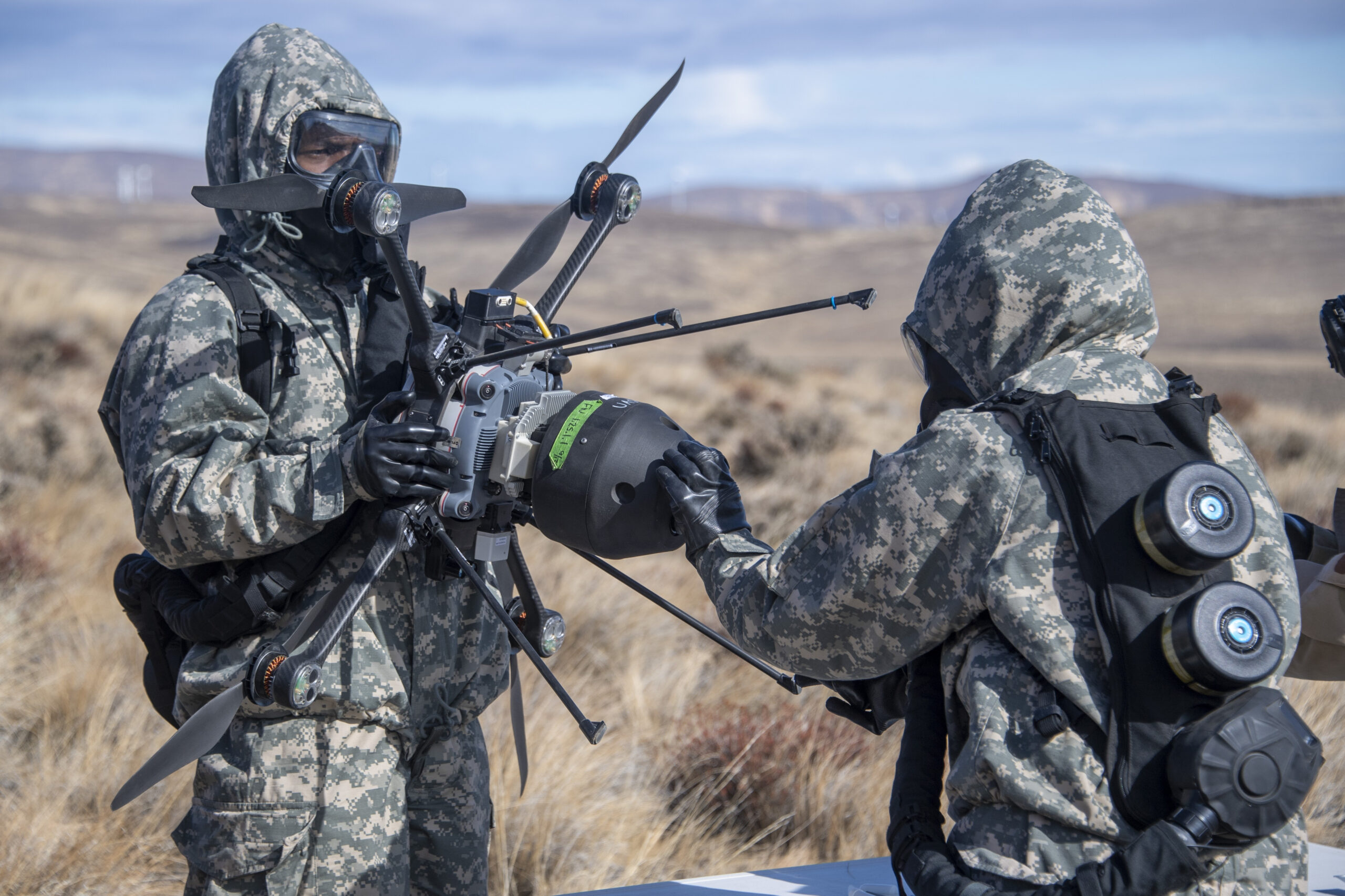
Teledyne FLIR Defense has secured an $11.2-million contract to supply its R80D SkyRaider unmanned aerial systems for the US Army’s chemical, biological, radiological, and nuclear (CBRN) missions.
The order covers more than 45 units equipped with semi-autonomous search and survey capabilities to assist dismounted troops in scouting contaminated environments.
Each platform carries the company’s proprietary MUVE B330 biological sensor, along with additional CBRN payloads to improve real-time hazard detection and identification.
Work for the contract will take place at Teledyne FLIR facilities in Maryland and Indiana, with additional engineering activities carried out in Oklahoma.
Deliveries are scheduled to begin in the second quarter of 2026, with the systems to be fielded under the US Army’s Capability Program Executive for CBRN Defense, which oversees detection, protection, and medical countermeasures against weapons of mass destruction.
SkyRaider Sensor Kit
Teledyne FLIR said the sensor kits used on the SkyRaider are developed under the US Army’s CRISP program.
CRISP, or CBRN Sensor Integration on Robotic Platforms, focuses on rapidly prototyping and fielding modular systems that enhance aerial and ground drones with autonomy, AI, sensing, machine learning, and communication technologies.
“Safe-guarding soldiers from weapons of mass destruction is at the core of our mission,” said Dr. JihFen Lei, president of Teledyne Defense and Aerospace Group and senior vice president of Teledyne Technologies.
“These SkyRaider-based sensor kits dramatically improve how units can detect and map CBRN hazards without exposing warfighters to dangerous environments.”