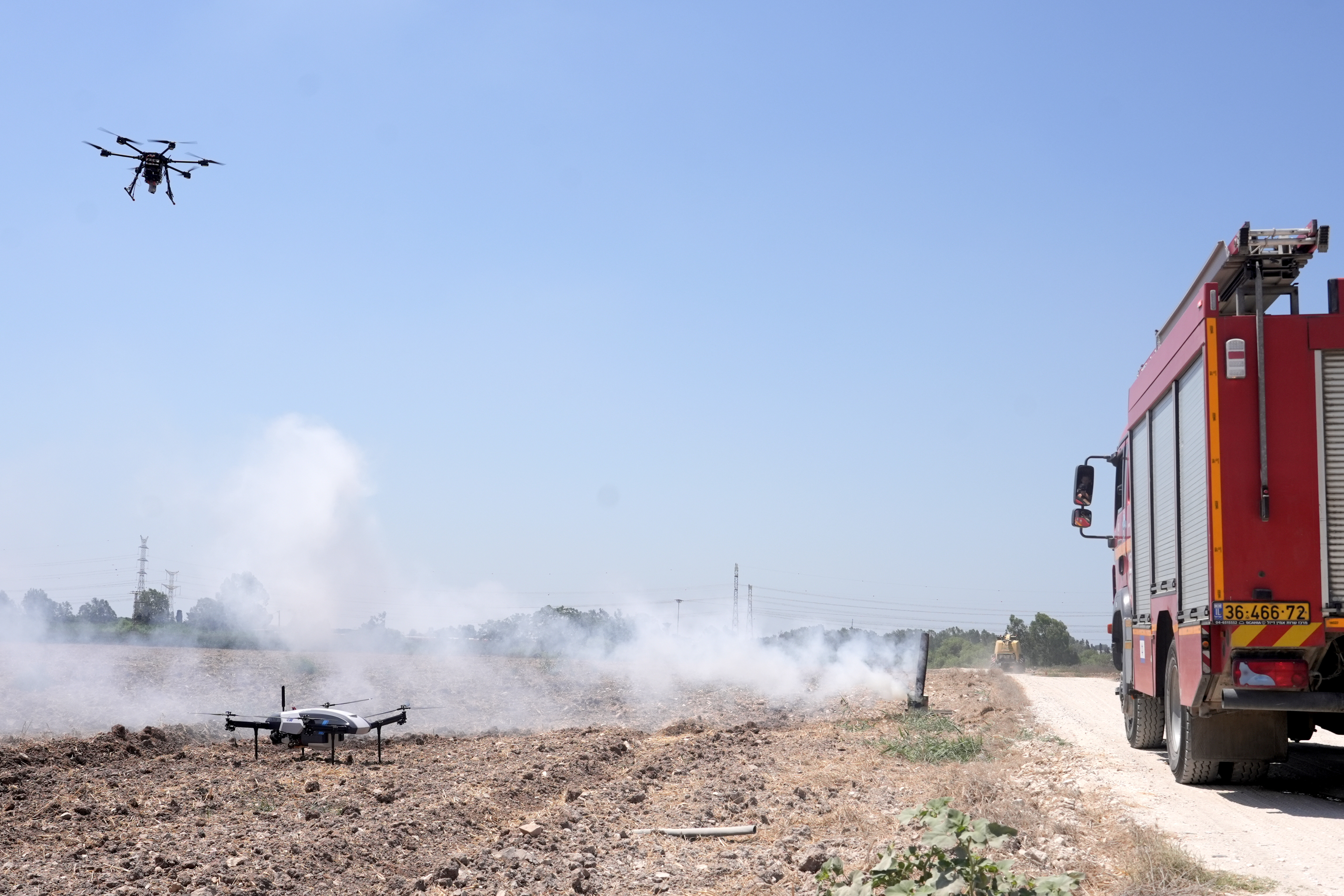
Israel has completed the first flight test of an AI-powered tactical unmanned aerial system (UAS) designed to detect and track wildfires within minutes of ignition, helping authorities improve situational awareness and emergency response.
The project brings together the Ministry of National Security, the Israel Innovation Authority, Israel Aerospace Industries (IAI), the Technion Israel Institute of Technology, and the Israel Fire and Rescue Authority.
Additional trials will evaluate the system under a range of operational and environmental conditions before it enters service.
“This project represents another step forward in advancing innovative technological capabilities for Israel’s security and emergency organizations,” said Yaron Schone, head of research and development division at the Israeli Ministry of National Security.
“The collaboration between all participating organizations reflects the importance we place on connecting operational needs with Israeli innovation to develop solutions that help protect lives, property, and Israel’s natural resources.”
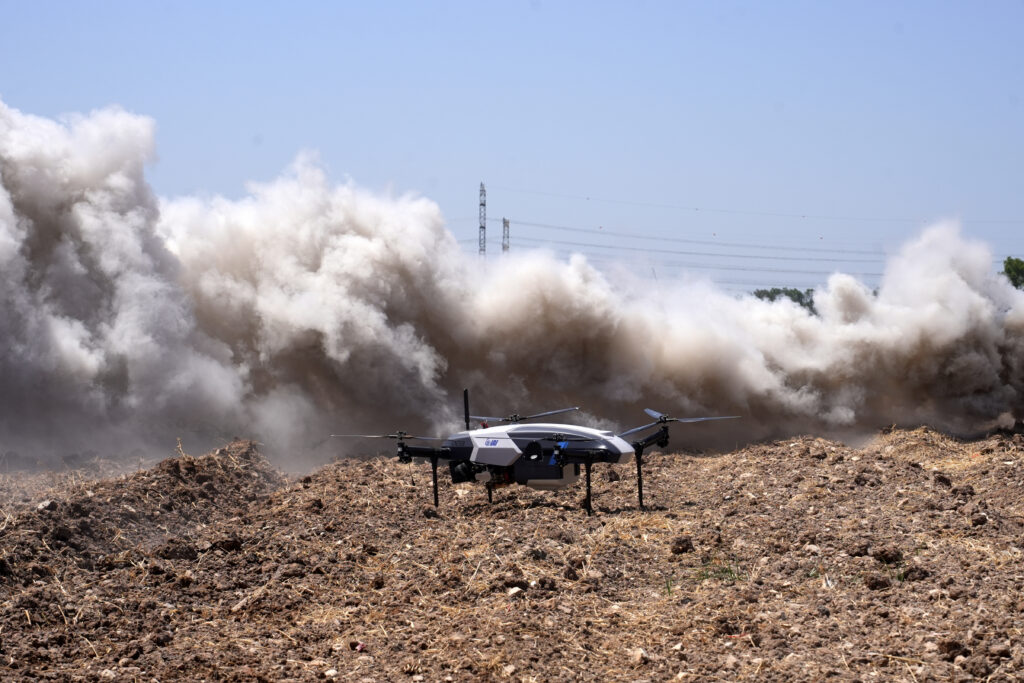
Utilizing IAI’s APUS 25
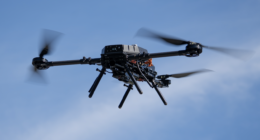
The system combines IAI’s proprietary APUS 25 vertical takeoff and landing aircraft with AI-powered image analysis that uses electro-optical and infrared sensors to identify fire hotspots through smoke and low-light areas.
The 24-kilogram (53-pound) quadcopter is powered by an internal combustion engine, allowing it to remain airborne for up to five hours while monitoring hundreds of square kilometers of terrain.
It can carry payloads of up to 10 kilograms (22 pounds), provide a 300-watt power supply for onboard equipment, and operate at altitudes reaching 10,000 feet (3,048 meters).
Once deployed, the modified UAS will transmit the location of detected fires directly to the Fire and Rescue Authority’s command center, enabling emergency crews to respond more quickly.
During routine patrols, firefighters will define the search area before the drone autonomously scans for new fire outbreaks.
Moshe Levy, executive vice president and general manager of IAI’s Military Aircraft Group, said the solution demonstrates how expertise in aviation, AI, and autonomous systems can be applied to “address an issue of both national and global importance.”
“For many years, IAI has been developing advanced technological solutions for complex challenges across both defense and civilian domains. This unique project … [enables] us to transform advanced technology into operational capabilities that deliver real value in the field.”