The US Navy and the UK Royal Navy have successfully fired an Mk 48 heavyweight anti-submarine and anti-surface torpedo from an experimental extra-large uncrewed underwater vehicle, marking a historic first for allied undersea warfare.
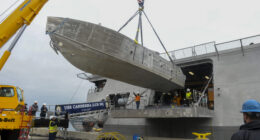
The trial took place at the British Underwater Test & Evaluation Center off Scotland as part of the London-led Project Broadsword exercise, where engineers mounted the 3,700-pound (1,678-kilogram) weapon onto the 12-meter (39-foot) XV Excalibur drone submarine.
Officials said the test validated the mechanical, electrical, and software integration needed to deploy the American kinetic payload from the British autonomous underwater vehicle.
The demonstration also showed how allied forces can integrate weapons with unmanned platforms from different countries, supporting greater interoperability without developing a new platform specifically for each weapon.
Driving ‘Shared Vision’
The activity was conducted under AUKUS Pillar 2, the seven-month portion of the trilateral security framework between Australia, the UK, and the US focused on co-developing advanced military capabilities.
While Pillar 1 centers on delivering nuclear attack submarines to Australia, Pillar 2 seeks to rapidly field asymmetric capabilities, such as unmanned platforms, artificial intelligence, and quantum technologies.
The capabilities developed under both pillars are intended to help the three allies address growing security challenges in the Indo-Pacific and Euro-Atlantic regions.
“Proving that we can seamlessly launch a US heavyweight torpedo from a Royal Navy autonomous underwater vehicle validates our shared vision for true interchangeability,” said Adm. Daryl Caudle, naval operations chief at the US Navy.
“We are increasing the flexibility, scale, and combat power of our combined forces and ensuring they are ready to meet the strategic demands of tomorrow.”