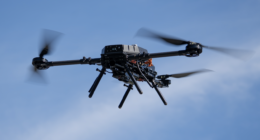
Ukrainian forces have deployed drones to airdrop 4 tonnes (8,818 pounds) of food and other supplies across more than 100 locations in Russian-occupied Oleshky.
The operation comes as food shortages in the city have reportedly become so severe that some residents have resorted to foraging for weeds and other plants for food.
The drones carried boxes containing food and cooking oil, which Ukrainian military units delivered in multiple waves.
Video captured by the drones showed residents receiving some of the supplies, while Russian troops reportedly intercepted other airdrops and forcibly took boxes from civilians.
Ukrainian officials said the use of drones were necessary to bypass landmines that they accuse Russia of placing around Oleshky.
“This [aid] will give people the opportunity to live there for up to a month,” Kherson Regional Military Administration Head Oleksandr Tolokonnikov told CBC News.
Drones Take on Humanitarian Missions
Tolokonnikov said Ukraine has conducted several previous airdrop operations, although earlier missions were carried out on a smaller scale.
The use of drones allows supplies to reach areas where conventional ground deliveries are difficult or dangerous, particularly when roads are mined or inaccessible.
Drones can also bypass physical obstacles that would delay or prevent ground-based resupply, helping get critical supplies to isolated personnel and communities more quickly.
In Ivano-Frankivsk, a healthcare facility has turned to uncrewed aerial platforms to deliver medicine and other supplies to hard-to-reach areas.
Ukrainian drones have also supported American-led efforts to transport freeze-dried powdered plasma to military medics operating near the frontlines.
“Drones are everywhere and inescapable,” said Corey Bills, an associate professor at the Center for Global Health Emergency Medicine.
“So we’re trying to see if we can get blood products to individuals at their point of injury, as opposed to waiting the two, four, even seven days it takes to get someone from the front line to a hospital.”