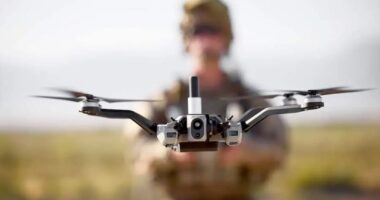
Kyiv has reportedly struck a Russian air defense system with a small first-person view (FPV) drone for the first time, marking a notable milestone for Ukrainian drone warfare capabilities.
Reports claim the FPV attack drone targeted an S-300V anti-ballistic missile system deployed in the Luhansk region of eastern Ukraine.
The Soviet-era system is designed to intercept both ballistic and aerodynamic targets at ranges of up to 100 kilometers (62 miles).
Typically, such high-value air defense assets are protected by dedicated radar crews, drone specialist teams, and layers of Russian counter-drone defenses.
The strike suggests the S-300V’s protective measures were either inactive at the time or unable to counter Ukraine’s FPV drone attack.
Observing Russian Defenses
A typical Russian air defense network reportedly consists of multiple layers, including small radar systems positioned up to 20 kilometers (12 miles) deep from the frontline to detect airborne threats.
Electronic warfare posts are also deployed around key positions, providing additional protection for logistics hubs and artillery units.
Air surveillance posts staffed with troops carrying machine guns, alongside mobile fire groups, form another defensive layer across the area.
Experts say NATO militaries must adapt their tactics to operate around these layered defenses, noting that while Russia has developed complex air defense concepts, battlefield execution has often been inconsistent.