U.S. Marine Corps Lance Cpl. Isaiah Trujillo, an unmanned aircraft system (UAS) maintenance technician with Marine Unmanned Aerial Vehicle Squadron (VMU) 3, Marine Aircraft Group (MAG) 24, 1st Marine Aircraft Wing (MAW), and Lance Cpl. Mario Mendoza, a UAS maintenance technician with VMU-1, MAG-13, 3rd MAW, recover a U.S. Marine Corps RQ-21A Blackjack aircraft during Weapons and Tactics Instructor (WTI) course 1-20 at Canon Air Defense Complex in Yuma, Arizona, Sept. 26, 2019. WTI is a seven week training event hosted by Marine Aviation Weapons and Tactics Squadron One (MAWTS-1), which emphasizes operational integration of the six functions of Marine Corps Aviation in support of a Marine Air Ground Task Force. WTI also provides standardized advanced tactical training and certification of unit instructor qualifications to support Marine Aviation training and readiness, and assists in developing and employing aviation weapons and tactics. (U.S. Marine Corps photo by Cpl. Adaezia Chavez)
Troops recover an RQ-21A Blackjack (Integrator) unmanned aerial system. Photo: Cpl. Adaezia Chavez/US Marine Corps

Boeing subsidiary Insitu and aviation communications provider Gogo Special Missions have combined and tested a high-speed satellite connectivity system on a Group 3 unmanned aerial system.

The project adapted Gogo’s Galileo HDX antenna for Insitu’s Integrator military drone, providing global internet connectivity via Eutelsat’s OneWeb low-Earth orbit (LEO) satellite network.

The solution offers military drone operators an alternative to Starlink for high-bandwidth satellite connectivity.

It uses a single line-replaceable unit engineered to meet the aircraft’s size and weight constraints without requiring major modifications to the airframe.

The satellite link is also free from US International Traffic in Arms Regulations (ITAR) control, potentially simplifying export compliance for international military customers.

‘Essential Capability’

During trials, operators paired the platform with Boeing’s FLARES vertical takeoff and landing drone, demonstrating launch and recovery capabilities in high seas and strong winds while using minimal deck space.

The test highlighted the growing role of satellite-enabled command links as defense forces seek to maintain theater-level connectivity in contested and jammed environments.

“Adding an ITAR-free, high-speed SATCOM option is an essential capability for our global customers — extending command and control and allowing seamless backhaul of sensor data with minimal latency,” said John Kelly, vice president of growth at Insitu.

Ben Massey, general manager of Gogo Special Missions, added that modifying the antenna addresses growing demand for high-bandwidth connectivity on mid-sized military platforms.

“With our antenna system … Insitu customers will now be able to access high-speed, global internet,” Massey stated.

Neither company disclosed a timeline for full operational deployment.

The RQ-21A Blackjack (Integrator) unmanned aerial system. Photo: Boeing
You May Also Like

Ukraine’s 2026 Drone Spending Up By 300% Compared to Last Year: Report

Ukraine claims drone spending in 2026 has already increased by over 300 percent compared to the entirety of 2025.

‘One Eye for All Drones’: Ukraine Launches Central Mission Control for UAVs

Mission Control centralizes all in-service drones into a single platform, enabling real-time monitoring, automated data processing, and unified battlefield visibility.

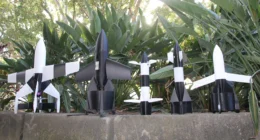
‘American Shahed’: Griffon Target Drone Now Set to Fly as Kamikaze Strike Weapon

The MQM-172 Arrowheads will be reconfigured as 100-lb modular loitering munitions, retaining the delta-wing airframe with RATO or truck launch for rapid, low-cost strikes.

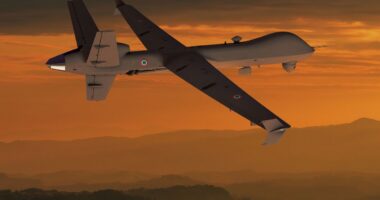
Italy Orders Two More MQ-9A Reapers for Mediterranean Surveillance

Italy strengthens long-endurance surveillance with two MQ-9A Block 5 Reapers equipped for tracking, imaging, and maritime missions.