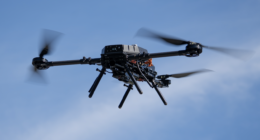
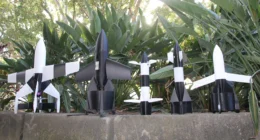
The US Department of Defense has named 10 top-performing drone makers from Gauntlet II, the second major competition in its $1-billion Drone Dominance Program.
The Defense Innovation Unit (DIU) and Test Resource Management Center ran the flyoff at Fort Carson, Colorado, evaluating 23 small unmanned aerial systems (UAS) from 19 companies.
Military operators tested the low-cost, one-way attack drones in two categories: Deep Strike and Close Quarters Battle.
Across 1,858 sorties, they assessed performance under electronic warfare and GPS-denied conditions, as well as in live-fire lanes.
Perennial Autonomy, Neros Lead
Perennial Autonomy topped the Deep Strike category with 80.1 points, followed by Hyperscale, Neros, Skycutter, and Swarm Defense Technologies.
All 11 UAS tested for the long-range mission met the 15-kilometer (9-mile) range requirement.
Neros led Close Quarters Battle with 88.1 points. ORQA US, XTEND Reality, Vector, and ModalAI rounded out the top five.
The Drone Dominance Program
The Pentagon plans to order approximately 60,000 drones from the Gauntlet II winners, tripling the order size from the initial Gauntlet phase.
The program seeks lower-cost, more capable drones backed by a stronger domestic supply chain.
Across the wider initiative, the Pentagon aims to field more than 200,000 small UAS by 2027.
The 10 top performers are now in line to compete for prototype delivery orders issued through Naval Surface Warfare Center – Crane Division in Indiana.
DIU expects to run Gauntlet 2.5 next month, with a focus on a bomber platform mission.