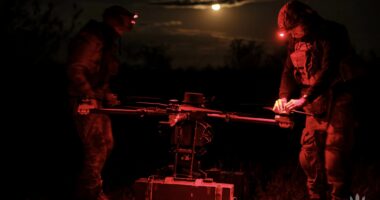
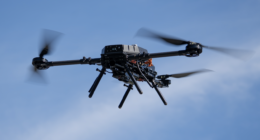
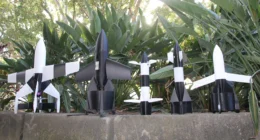
The US Marine Corps has begun service-level training to teach troops how to counter drone threats using standard-issue weapons they already carry.
Held at Twentynine Palms, California, the three-day event featured soldiers from the 1st and 2nd Marine Divisions using rifles, shotguns, and grenade launchers against small unmanned aerial systems (sUAS).
Marines engaged simulated drone threats at distances as close as 20 meters (65 feet), with targets traveling at speeds of up to 90 miles per hour (145 kilometers per hour).
Beyond live-fire drills, troops conducted house-clearing and patrol exercises to test their ability to detect and neutralize sUAS threats in combat scenarios.
“Everywhere in the modern world, in all conflicts, the sUAS threat is becoming more prolific on the battlefield,” said Marine Corps Gunnery Sgt. Kevin Jares.
“We’re figuring out ways, with the squad’s organic weapons, to combat that threat and how to survive in today’s modern battlefield.”
Adapting to Modern Threats
The counter-sUAS training is expected to become part of future service-level exercises, incorporating drone-defense tactics, techniques, and procedures into broader marine corps training.
Marines who took part in the event are expected to bring those skills back to their units, giving frontline troops more options for dealing with drones using weapons already available at the squad level.
“[sUAS] have been around for a while, it’s just more prevalent in the battlespace today because it’s more cost-effective,” said US Marine Corps Capt. Faith Richardson. “The intent of the C-sUAS [training] was to build the confidence of our Marines to target sUAS.”